Rectangle
Definition, properties, formulas, and golden rectangle ratio
Overview
A rectangle is a quadrilateral with four right angles. Opposite sides are parallel and equal. A square is a special rectangle where all four sides are equal.
Main properties:
- Four sides and four corners
- All interior angles are 90°
- Opposite sides are parallel and equal in length
- Both diagonals have equal length
- The diagonals intersect at the center of symmetry
Angle bisector
Median
Altitude and the Orthocenter
Triangle bisector
Pythagorean theorem
Pythagorean triples
Circle
Square
Rectangle
Rhombus
Parallelogram
Trapezoid
Rectangle Formulas
Area

Perimeter

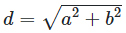
Diagonal
Circumradius
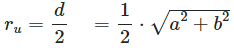

\(\displaystyle A=a\cdot b\), \(\displaystyle U=2(a+b)\), \(\displaystyle d=\sqrt{a^2+b^2}\)
Golden Rectangle
A rectangle is called a golden rectangle when its side ratio follows the golden ratio:
\(\displaystyle \frac{a+b}{a}=\frac{a}{b}=\frac{1+\sqrt{5}}{2}\approx1.6180339887\)
This ratio appears frequently in geometry, design, and nature.
|
|
|
|